

The Glare Paradox
Achieving Visual Comfort in Direct-View Linear Lighting
Picture a newly designed luxury hotel lounge. The designer has masterfully integrated continuous linear lighting into the dark wood paneling at eye level, outlining the sleek curves of the bar and the seating areas.
When the sun sets and the lights turn on, the intended sophisticated ambiance is instantly shattered.
The light is aggressive. It reflects harshly off the polished stone countertops and pierces the eyes of the guests sitting nearby. Instead of a warm, inviting atmosphere, the space feels like a brightly lit fast-food restaurant. The designer attempts to fix it by dimming the lights, but then the architectural lines lose their definition and the space feels gloomy.
This is the "Glare Paradox" of modern linear lighting. How do you maintain a crisp, continuous line of light directly in the human field of view without destroying visual comfort?

The Anatomy of Glare and UGR
To understand the problem, we must look at how standard LED neon functions.
Standard architectural neon relies on a milky silicone or polyurethane casing. This acts as a Lambertian diffuser, scattering the pinpoint light of the LED chips into a smooth, continuous glowing surface. However, this glowing surface emits photons in all directions—including straight into the viewer's eyes.
In lighting design, this visual discomfort is measured by the Unified Glare Rating (UGR). For high-end interiors, offices, and hospitality spaces, a strict UGR of less than 19 (UGR < 19) is required to prevent eye fatigue and maintain psychological comfort. Standard neon strips placed at eye level routinely fail this metric.
The Flawed Fixes
Historically, the industry has offered compromised solutions to control linear glare:
External Aluminum Louvers: You can install metal baffles over the strip. But this destroys the flexibility of the neon, making it impossible to follow 3D curves, and adds significant bulk to the profile.
Surface Printing (Silk-Screening): Many manufacturers simply paint or print a black grid onto the surface of the silicone. While cheap, this ink quickly scratches off during installation or maintenance, and looks incredibly artificial when the light is turned off.
Sacrificing Efficiency: Some low-glare materials block so much light that the luminaire becomes wildly inefficient, requiring massive power consumption just to achieve a basic glow.
The Engineering Solution: Optical Co-Extrusion
Solving the glare paradox requires physically controlling the direction of the light within the material itself, without destroying the luminaire's flexibility or efficiency.
This demands a structural intervention. By creating a micro-honeycomb structure on the emitting surface, we can physically cut off the stray, wide-angle light rays that cause glare, allowing only the direct, downward/forward light to pass through.
The JRLite AG 1617 Series: Beyond Lighting
At JRLite, we believe that when a luminaire is in direct view, it ceases to be just a light source—it becomes a piece of the architecture. It must look stunning whether it is turned on or off.
This philosophy drove the engineering of our AG 1617 (Anti-Glare) Series.
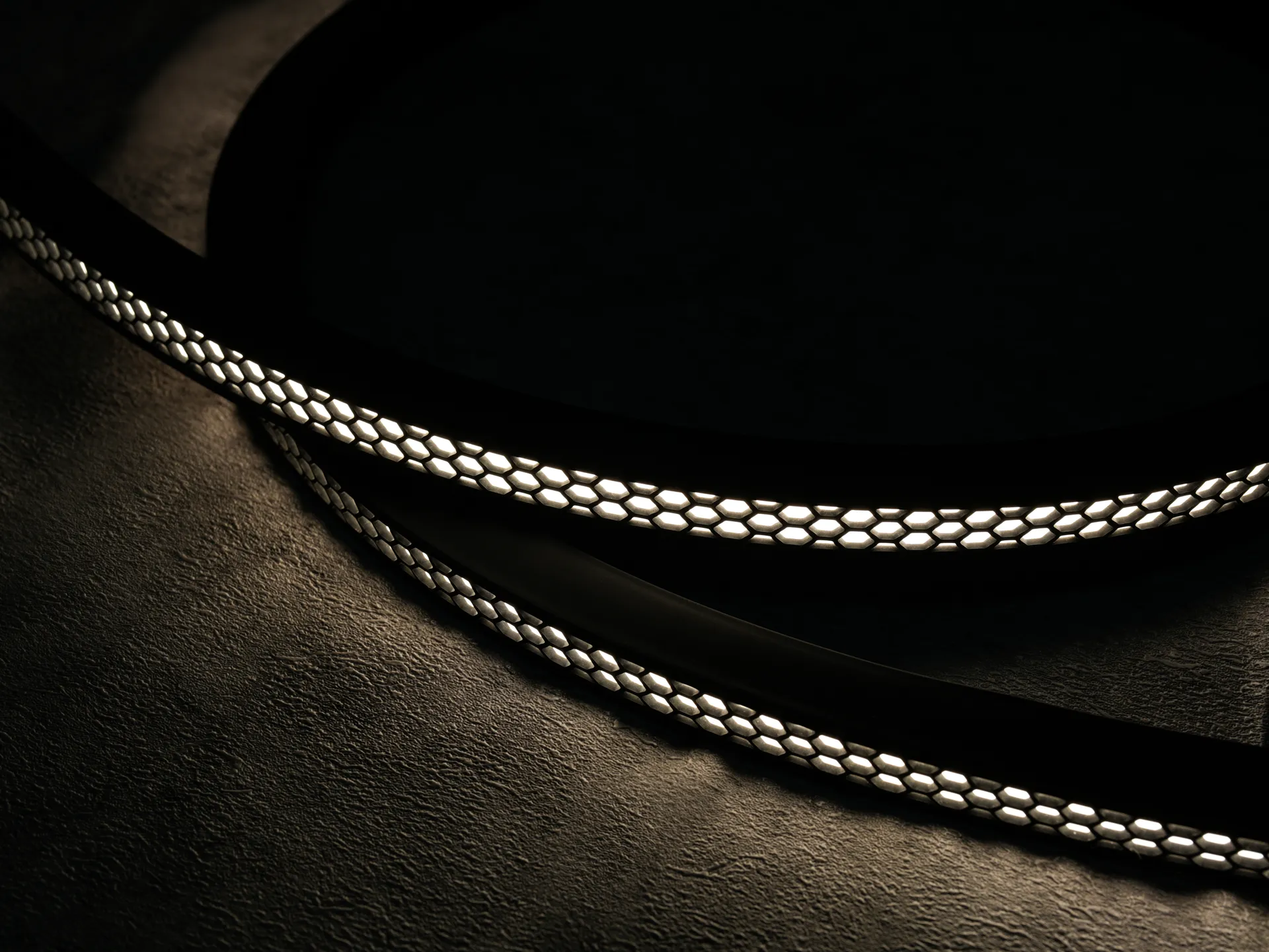
Instead of relying on cheap surface printing, we utilize a proprietary Integral Co-Extrusion process. The honeycomb grid is physically extruded as part of the silicone body itself. It will never scratch, peel, or fade. This structural precision physically cuts off stray light, successfully achieving a UGR < 19 for pure visual comfort.
Furthermore, we engineered the AG 1617 to defy the typical compromises of anti-glare technology:
Defying the Efficiency Trap: Despite the strict glare control, the internal optics deliver a relatively high luminous efficacy, making it significantly brighter and more energy-efficient than market averages.
Defying the Distance Limit: It is engineered for massive installations, capable of running 20 meters continuously on a single-end feed.
Aesthetic Versatility: For dark-themed interiors, the AG 1617 is available with a Black Body (The ultimate "Stealth" look). When turned off, it vanishes into the dark architecture; when turned on, it delivers a precise, textured line of soft light.
Lighting should enhance the mood, not fight it. Control the glare, protect the vision, and Light the Exceptional.
About the Column: The Practical Guide series by JRLite translates complex lighting technology into actionable strategies, empowering architects, engineers, and lighting professionals to navigate real-world challenges with confidence.


