

Anatomy of Resilience
The Engineering Behind "Unbreakable" Architectural Neon
flagship retail boutique. The lighting contractor is installing a continuous 20-meter run of flexible linear light into a tight, custom-milled architectural cove. Time is running out. In a rush to navigate a sharp corner, a worker pulls the strip a fraction too hard and twists it slightly against its natural bending axis.
They power on the system. The first 5 meters illuminate beautifully. The remaining 15 meters are completely dead.
A microscopic fracture—invisible to the naked eye—has just cost the project thousands of dollars in replacement materials, scaffolding rentals, and delayed opening penalties.
In the world of high-end architectural lighting, the lab environment is perfect, but the construction site is unforgiving. Understanding how flexible lighting fails in the real world is the first step to engineering a luminaire that doesn't.
The Achilles' Heel of Flexible Lighting
To understand the failure, we must look inside. At the core of every flexible LED strip is an FPCB (Flexible Printed Circuit Board).
While "flexible" by name, these copper circuits obey strict laws of physics. They are designed to bend along a specific axis and have a strict minimum bending radius. However, on a bustling job site, lights are subjected to forces they weren't designed for:
Tensile Stress (Pulling): Dragging a long, heavy strip through a profile stretches the internal components.
Torsional Stress (Twisting): Forcing a top-bend strip to curve sideways creates immense shear force.
When these stresses exceed the material's limit, the microscopic copper traces on the FPCB crack. Because LED strips are wired in a continuous series-parallel circuit, a single crack breaks the electrical path. Everything downstream of that microscopic break instantly loses power.
The Solution Part 1: Mechanical Armor
If we know how the circuit breaks, how do we protect it? The answer lies in structural engineering.
Just as reinforced concrete uses steel rebar to absorb tension, premium linear lighting must incorporate an internal skeleton. By embedding a Tensile Fiber Mesh directly beneath the FPCB, the physical pulling force is transferred away from the delicate copper and onto the high-strength fibers.
Furthermore, integrating a Structural Reinforcement Layer acts as a physical spine. It guides the luminaire, essentially "locking" it into its intended bending direction and physically preventing the installer from twisting it incorrectly.
The Solution Part 2: Electrical Redundancy (The Failsafe)
But what if the mechanical armor isn't enough? What if an installer uses extreme force, or heavy equipment drops on the luminaire, causing the PCB to snap anyway?
In aerospace engineering, critical systems always have a backup. If the primary system fails, a redundant system immediately takes over. This same philosophy must be applied to premium architectural lighting.
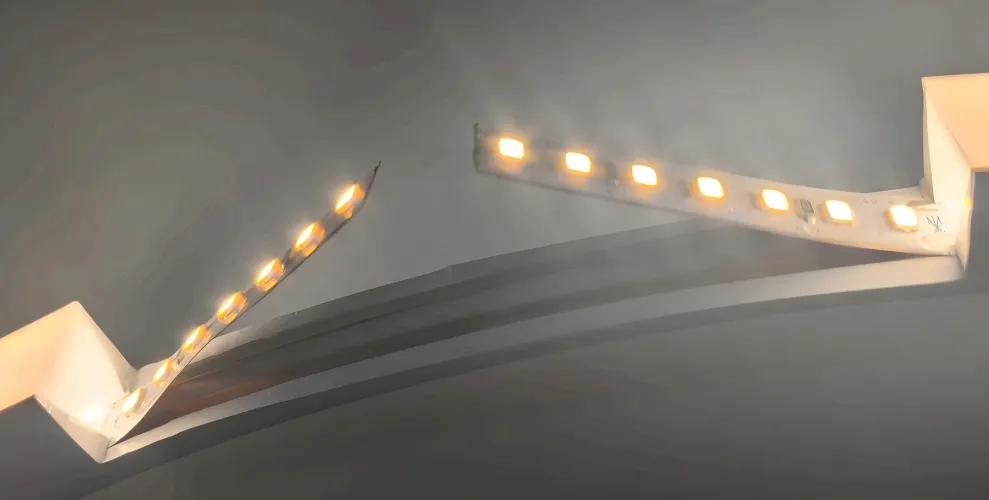
By engineering a Secondary Copper Conductor—a continuous, independent copper strip running beneath the primary PCB—you create a parallel electrical highway. If the primary PCB trace suffers a catastrophic crack, the current doesn't stop. The electrons simply bypass the fracture via the secondary conductor. The circuit remains closed, and the rest of the luminaire stays perfectly lit.
Engineered for Reality: The JRLite Difference
At JRLite, we know that exceptional designs are only as good as their execution on the job site. We do not just engineer for the pristine conditions of a testing lab; we engineer for the harsh realities of construction.
Our premium architectural neon series features a revolutionary Multi-Layered Reinforced Construction. We utilize heavy-duty 4oz rolled-copper PCBs paired with a Secondary Copper Conductor to provide ultimate "Double Insurance." Even if the board physically snaps under extreme abuse, our failsafe ensures the show goes on.
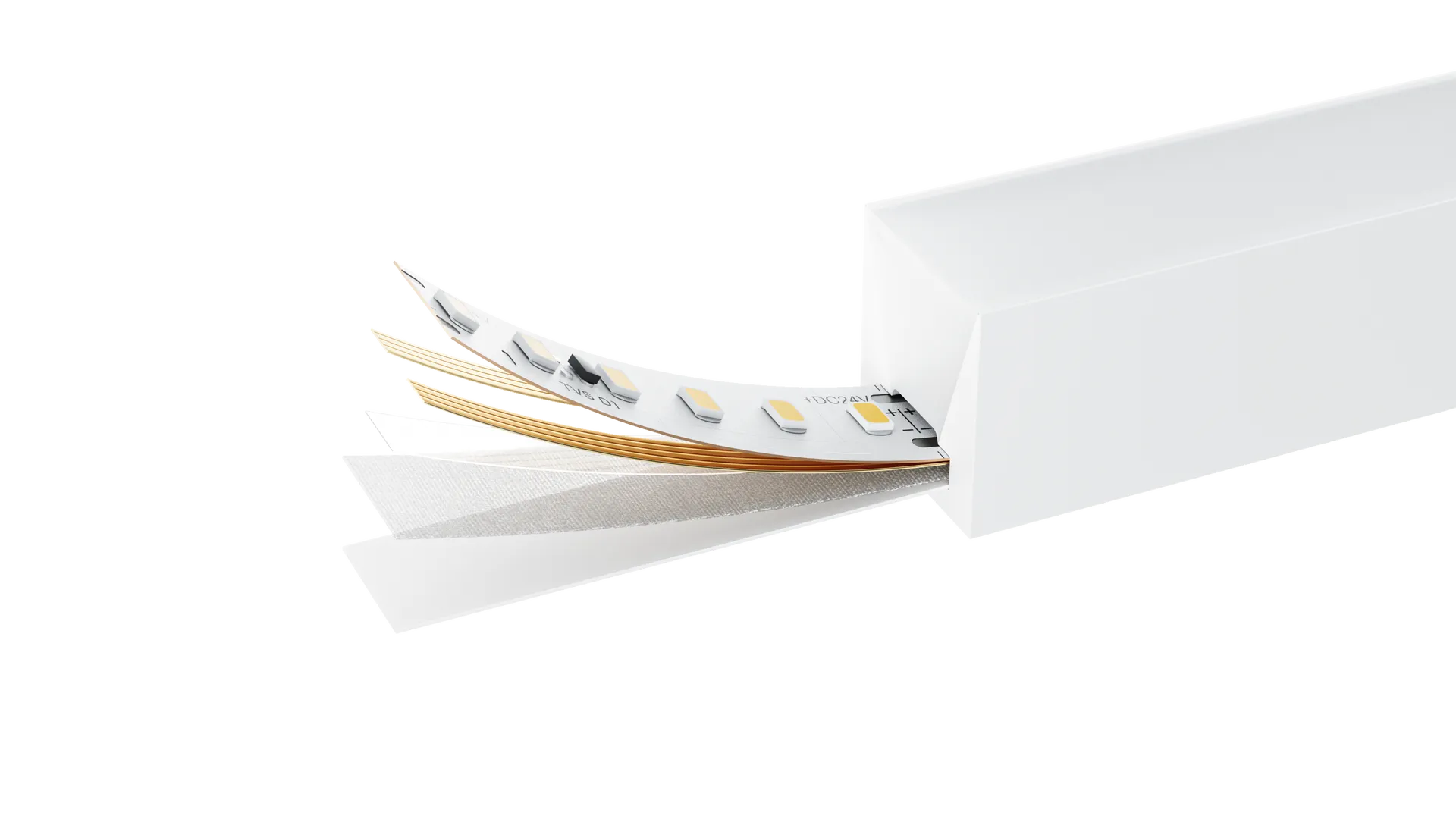
We wrap this redundant electrical system in a tensile fiber skeleton and encapsulate it entirely in optical-grade solid silicone.
The result is a lighting instrument that defies mechanical failure, eliminates voltage drop over long runs, and provides ultimate peace of mind for contractors and designers alike. Because when you choose to Light the Exceptional, you shouldn't have to hold your breath when the switch is flipped.
About the Column: The Visual Tech series by JRLite explores the science, art, and engineering behind architectural lighting, empowering designers to make informed decisions for exceptional spaces.


